



Divorce procedures in Dubai are among the legal matters that require a clear understanding before taking any step, especially when the divorce is connected to sensitive issues such as child custody, alimony, division of assets, or differences in nationality and religion between spouses. The procedures vary depending on the type of divorce, whether it is a Sharia-based divorce or a civil divorce for expatriates and non-Muslims. The duration and costs may also differ depending on the level of agreement or dispute between the parties.
In this guide, Advocator Dubai explains the general divorce procedures, required documents, factors affecting the duration and costs of the case, as well as the rights of spouses and children after divorce, while emphasizing that every case requires an independent legal assessment based on its own circumstances and supporting documents.
Are You Considering Starting Divorce Procedures in Dubai?
You can contact Advocator Dubai for a clear and confidential legal consultation.
Table Of Content
Types of Divorce in Dubai: Sharia Divorce and Civil Divorce
The approach to divorce in Dubai differs depending on the religion and nationality of the spouses, the nature of the marriage contract, and the applicable law governing the marital relationship. In general, divorce cases in Dubai fall into two main categories:
Sharia Divorce in Dubai
This refers to divorce governed by Islamic Sharia principles and personal status laws. It usually covers matters such as waiting periods (Iddah), alimony, child custody, children’s rights, and the official registration of the divorce before the competent court.
Civil Divorce for Expatriates in Dubai
Civil divorce for expatriates in Dubai is a legal route that may apply to non-Muslims or foreign nationals depending on the nature of the marriage and the applicable law. It addresses matters such as mutual agreements, financial rights, child custody, and division of assets according to the legal framework relevant to each case.
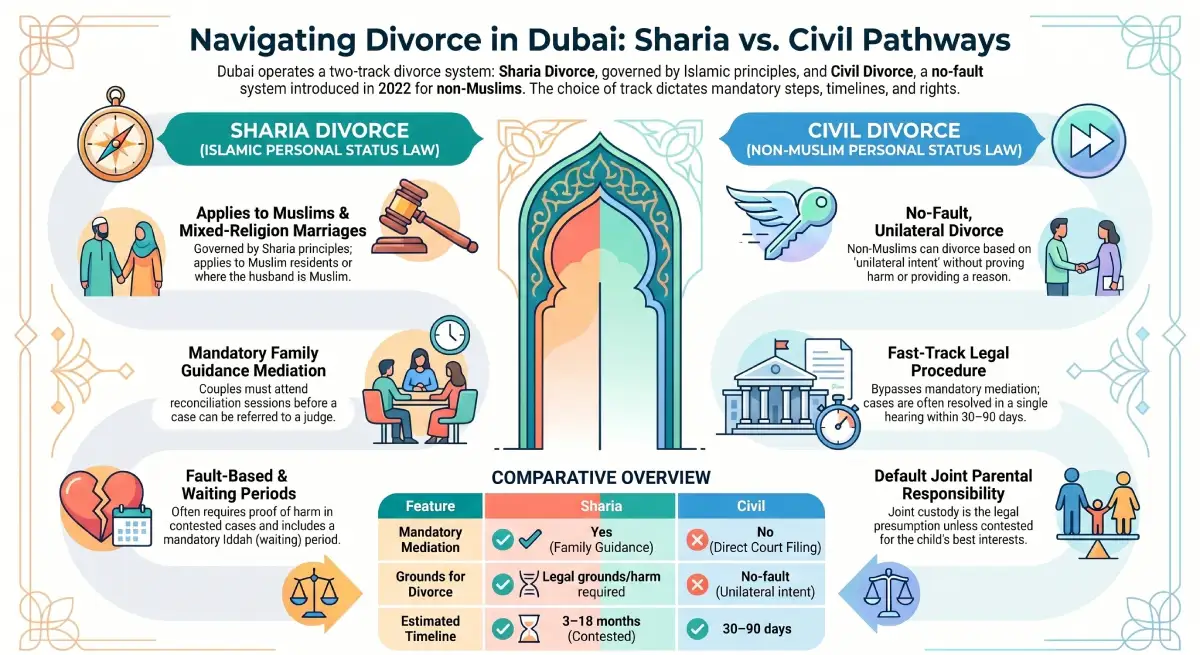
The Difference Between Sharia Divorce and Civil Divorce for Expatriates in Dubai
Before starting divorce procedures in Dubai, it is important to understand the difference between Sharia divorce and civil divorce, as the type of divorce affects the legal process, the competent court, financial rights, child custody arrangements, and the handling of shared assets. The appropriate legal path depends on the religion and nationality of the spouses, the nature of the marriage contract, and the applicable law governing the relationship.
| Comparison Point | Sharia Divorce in Dubai | Civil Divorce for Expatriates in Dubai |
|---|---|---|
| Scope of Application | Usually applies to marriages governed by Islamic Sharia principles and UAE personal status laws. | May apply to non-Muslims or expatriates depending on the nature of the marriage and the chosen or applicable law. |
| Spouse Rights | Rights may include alimony and other financial rights according to Sharia and applicable personal status laws. | Rights are generally determined according to prior agreements, submitted documents, and applicable civil laws. |
| Child Custody | The court considers the child’s best interests and the circumstances of each parent in accordance with custody regulations. | The court also prioritizes the child’s best interests, while agreements between the parties and civil law provisions may influence custody and visitation arrangements. |
| Division of Assets | The court reviews ownership rights and supporting financial documents submitted by both parties. | Agreements between spouses and applicable civil rules may play a significant role in determining financial rights and asset division. |
| Duration of Procedures | The process may take longer if disputes arise regarding alimony, custody, or financial rights. | The process may be faster if both parties agree, but disputes regarding finances or children can extend the duration. |
Divorce procedures in Dubai vary depending on the details of the marriage, the nationality of the parties, the available documents, and whether children or shared assets are involved. Therefore, obtaining legal advice before selecting the legal route or submitting the application is highly recommended.
What Are the Divorce Procedures in Dubai?
Divorce procedures in Dubai are the legal steps followed to officially terminate a marital relationship before the competent authorities. These procedures usually begin with family guidance or reconciliation efforts and may proceed to court if the spouses fail to reach an amicable settlement.
Divorce procedures do not only involve ending the marriage itself but may also include related matters such as:
- ثبت the divorce or obtaining a court judgment confirming it.
- Determining spousal or child support.
- Organizing custody and visitation rights.
- Dividing assets or resolving financial obligations between the spouses.
- Attesting the divorce judgment or certificate for use داخل or outside the UAE.
Steps of Divorce Procedures in Dubai
Divorce procedures in Dubai go through several legal stages designed to provide both parties with an opportunity for reconciliation before escalating the matter to court. Although details may vary depending on the type of case, the general steps usually include the following:
1. Filing the Application with the Family Guidance Department
The process usually begins by submitting an application to the Family Guidance Department at Dubai Courts. This stage aims to resolve the dispute amicably before referring the matter to court.
2. Reconciliation and Mediation Sessions
The Family Guidance Department holds sessions with both parties to attempt reconciliation or facilitate an amicable agreement regarding divorce and its related rights and obligations.
If reconciliation succeeds, the agreement may be officially documented. If settlement efforts fail, the case may be referred to the competent court.
3. Referral of the Case to Court
If no agreement is reached, the matter is referred to the Personal Status Court or another competent judicial authority depending on the nature of the case. Parties should carefully observe the applicable deadlines and procedures after referral to avoid delays.
4. Filing the Lawsuit and Supporting Documents
At this stage, the party seeking divorce files the case together with supporting documents such as the marriage certificate, identification documents, children’s birth certificates if applicable, and any documents related to alimony, custody, or assets.
5. Court Hearings
The court reviews the requests of both parties and may require additional memoranda, evidence, or supporting documents. Issues such as custody, alimony, visitation rights, and division of shared property may also be examined.
6. Issuing the Judgment and Official Divorce Documentation
After reviewing the case, the court issues its judgment or officially documents the divorce according to the applicable legal process. In some cases, the parties may need to attest the divorce certificate through the competent authorities, especially if it will be used outside the UAE.
Civil Divorce Procedures for Expatriates in Dubai
Expatriates and non-Muslims in Dubai should understand the appropriate legal process before filing for divorce, as the nature of the marriage and the applicable law may affect the procedures and resulting rights.
Under the UAE Civil Personal Status Law 2022, civil divorce procedures for expatriates in Dubai usually include:
- Submitting the divorce application to the competent authority.
- Providing documents proving the marriage and identities of both spouses.
- Submitting evidence regarding children, assets, or financial agreements when necessary.
- Reviewing agreements concerning custody, support, and division of property.
- Issuing the divorce judgment or officially documenting the divorce.
Documents Required to File for Divorce in Dubai
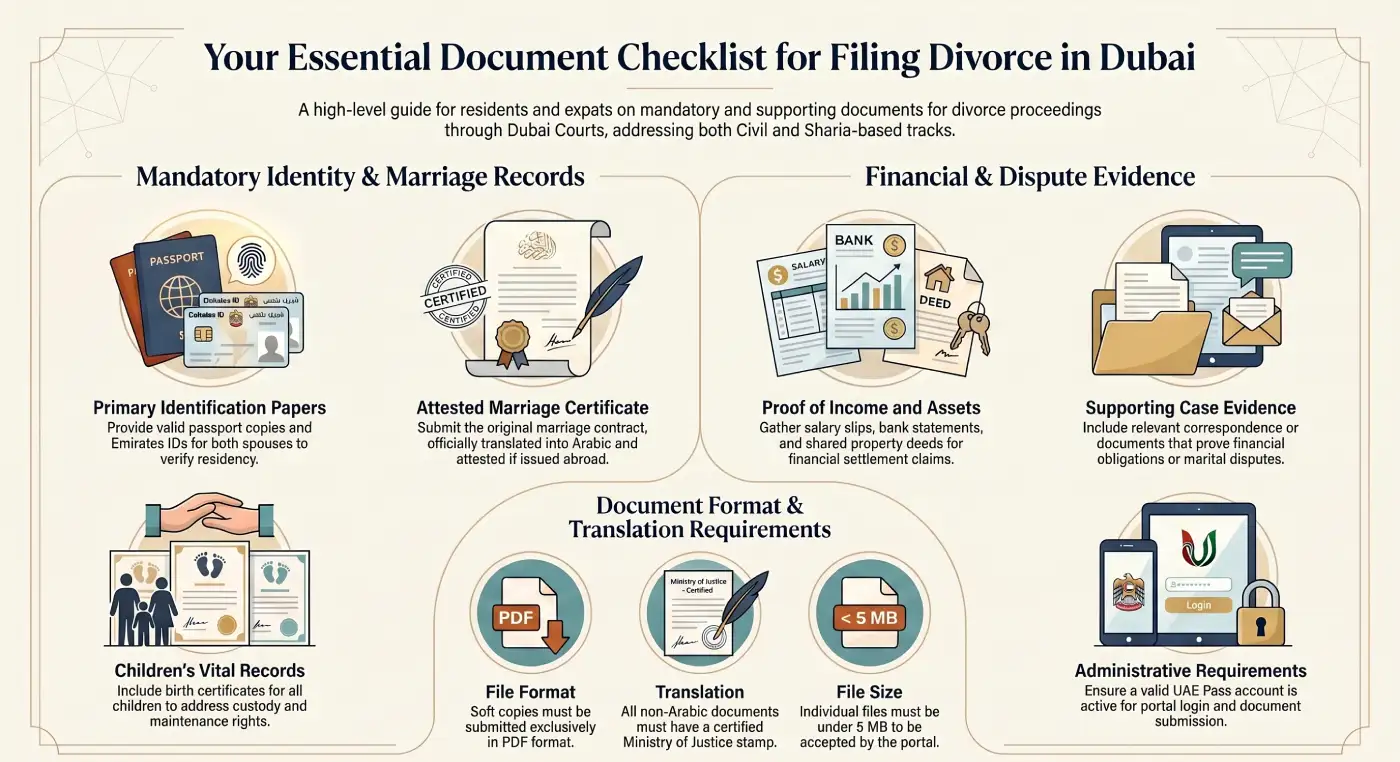
The required documents vary depending on the circumstances of the spouses and the type of divorce. However, the main documents may include:
- Passport copies.
- Emirates ID, if available.
- Marriage certificate or marriage contract.
- Children’s birth certificates, if applicable.
- Documents proving income or financial obligations.
- Documents related to shared property, accounts, or financial disputes.
- Any correspondence or evidence relevant to the case.
Costs of Divorce Procedures in Dubai
The costs of divorce in Dubai vary depending on the nature of the case, its complexity, the number of related claims, and whether disputes exist regarding custody, alimony, or assets. Therefore, it is difficult to determine the exact cost before reviewing the case details.
- Court Fees: Court filing fees in some divorce cases may range between AED 1,000 and AED 3,000, depending on the type of application and additional procedures involved.
- Legal Fees: Lawyer fees vary depending on the complexity of the divorce case. Fees may be lower in uncontested divorces and higher in cases involving disputes over custody, alimony, property, or appeals.
- Additional Costs: Additional expenses may arise for negotiations, drafting agreements, translation and attestation of documents, or appointing experts in financial or family-related matters.
Duration of Divorce Procedures in Dubai
The duration of divorce procedures in Dubai depends on the level of agreement between the spouses, the number of related claims, and whether disputes exist regarding children, finances, or property.
- Uncontested Divorce: If both spouses agree on the divorce and related matters such as custody, alimony, and division of assets, the process may conclude faster and may take approximately two to three months in some cases.
- Contested Divorce: If disputes arise over custody, alimony, property, or grounds for divorce, the procedures may take longer. Some cases may continue for six months to a year or more, especially when appeals or multiple claims are involved.
Factors Affecting the Duration and Cost of Divorce in Dubai
Several factors may influence the duration and cost of divorce proceedings, including:
- Level of Agreement Between the Spouses: Reaching agreements on key matters generally makes the process faster and less complicated.
- Presence of Children: Custody, alimony, and visitation issues may require additional hearings and detailed discussions.
- Disputes Over Assets: Shared assets, real estate, or financial obligations may prolong the proceedings.
- Appeals: Filing appeals against judgments may extend the case for additional months.
- Completeness of Documents: Preparing all required documents from the beginning can reduce delays.
Can Divorce Procedures in Dubai Be Accelerated?
Yes, divorce procedures in Dubai can be faster when both spouses clearly agree on the essential matters related to the divorce. The following factors may help speed up the process:
- Agreeing to an amicable divorce.
- Reaching written agreements regarding custody, support, and visitation beforehand.
- Preparing all required documents before filing the application.
- Using family guidance services to reach a settlement.
- Avoiding unnecessary escalation in matters that can be resolved amicably.
However, it is not advisable to rush into signing any agreement without legal review, as certain agreements may later affect the rights of one party or the children.
Want to Know the Expected Cost and Timeline for Your Case?
Our legal team can review your case details and help you understand the expected legal process before starting proceedings.
The Impact of Children on Divorce Procedures in Dubai
When children are involved, divorce procedures in Dubai become more sensitive and complex because the court prioritizes the best interests of the children in addition to the spouses’ request to end the marriage.
The case may involve several child-related matters, including:
- Custody and daily care responsibilities.
- Child support, including living expenses, education, healthcare, and housing.
- Visitation rights and communication schedules.
- Travel arrangements and travel bans when necessary.
- Educational and healthcare decisions.
- Providing suitable housing for the children after divorce.
In custody disputes, the court usually considers factors such as:
- The age and daily needs of the children.
- The educational and medical condition of each child.
- The relationship between the children and each parent.
- The custodian’s ability to provide care and stability.
- The stability of the living environment.
- The impact of parental disputes on the children’s welfare.
Child support claims may include:
- Basic living expenses.
- Education costs.
- Healthcare and medical treatment.
- Housing allowances or appropriate accommodation.
- Regular expenses related to children’s needs.
Disputes over custody, support, or visitation rights may increase both the duration and costs of divorce proceedings due to additional court hearings, supporting documents, legal memoranda, and negotiations regarding children’s welfare.
Therefore, it is advisable to approach such matters calmly and avoid using children as leverage in disputes, while obtaining clear legal advice before escalating the matter or signing any agreement affecting their rights.
The Role of a Personal Status Lawyer in Divorce Cases in Dubai
Having a Divorce Lawyer in Dubai can help you understand the procedures and avoid mistakes that may delay the case or affect your legal rights. A lawyer’s role usually includes:
- Assessing the client’s legal position before starting proceedings.
- Explaining legal rights and obligations.
- Preparing the divorce application and supporting documents.
- Representing the client before courts or competent authorities.
- Negotiating settlements when appropriate.
- Following up on enforcement of judgments related to custody, support, or visitation.
How Can Advocator Dubai Help You?
Advocator Dubai handles divorce and personal status cases with an approach based on confidentiality, careful case review, and clear explanation of legal options. The firm provides legal support in Sharia divorces, civil divorces for expatriates, custody, alimony, visitation, and settlement of financial obligations related to divorce.
The firm does not promise guaranteed outcomes, as every case depends on its own facts and supporting documents. However, obtaining legal advice can help you understand your position, evaluate risks, and choose the most appropriate legal action before proceeding.
Do You Have a Legal Question?
More than 60 specialized lawyers are ready to assist you.
Frequently Asked Questions About Divorce Procedures in Dubai
What is the first step in divorce procedures in Dubai?
Divorce procedures in Dubai usually begin by filing an application with the Family Guidance Department, where an attempt is made to resolve the dispute amicably before referring the matter to the competent court if no agreement is reached.
How long do divorce procedures take in Dubai?
The duration of divorce procedures in Dubai depends on the level of agreement between the spouses. Uncontested divorce cases may take approximately two to three months, while contested cases may continue for six months, a year, or even longer depending on the complexity of the dispute and whether appeals are filed.
What documents are required to file for divorce in Dubai?
The required documents usually include passports, Emirates IDs if available, the marriage certificate, children’s birth certificates, and any financial or family-related documents that support the claims submitted in the case
Who gets child custody after divorce in Dubai?
The court determines child custody based on the best interests of the child and the circumstances of each case, taking into account factors such as the child’s age, the custodian’s ability to provide care, and the documents submitted by both parties.
Is it necessary for both spouses to attend divorce proceedings personally?
Both spouses may be required to attend certain stages of the process, especially family guidance sessions or important court hearings. However, in some cases, a lawyer may represent one of the parties according to the applicable procedures.
Are there additional costs when appealing a divorce judgment?
Yes, additional costs may arise when filing an appeal or challenging a divorce judgment. These may include extra court fees and legal procedures, and the appeal process may also extend the duration of the case.
Divorce procedures in Dubai vary depending on the type of divorce, the level of agreement between spouses, the presence of children, and the financial matters connected to the marriage. The procedures may be relatively straightforward in amicable divorces, but they can become longer and more complex when disputes arise over custody, support, or shared assets.
Before taking any legal step, it is advisable to review the available documents and understand the legal options to avoid decisions that may negatively affect your rights or your children’s rights later on.
Legal Disclaimer: The information provided in this article is for general informational purposes only and does not constitute legal advice or replace consultation with a qualified lawyer. Procedures and legal rights vary depending on the details of each case, the available documents, and the applicable law.
Sources